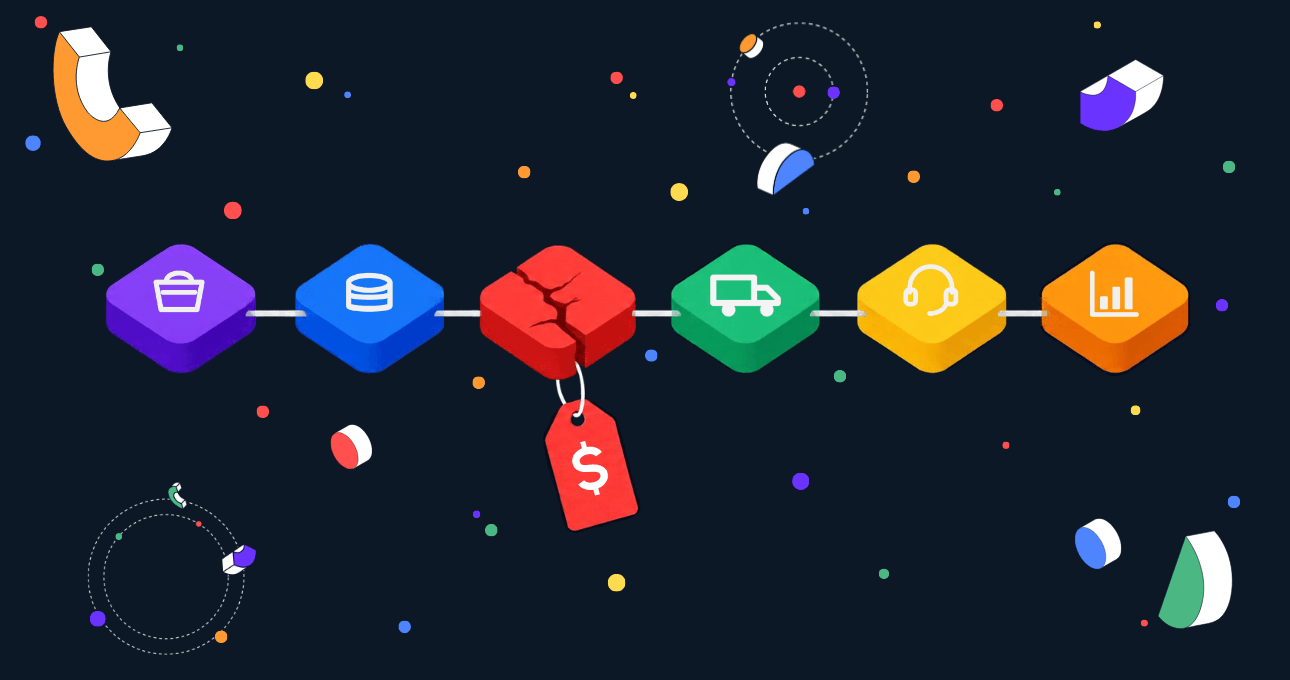
As more employees build, change, and automate software, the focus has shifted from the speed of change to its safety.
For years, organisations have sought faster software development. Customers, employees, and business leaders demand new applications, automated processes, and digital services, placing ongoing pressure on technology teams.
No-code and low-code platforms have alleviated much of this pressure. Business users can now build applications, automate workflows, and configure processes without coding or waiting for limited development resources. Gartner predicts that by 2026, developers outside formal IT departments will comprise at least 80% of low-code development tool users.
This shift presents significant opportunities but also increases the volume of software changes and the associated risk of software failure, which many organisations still underestimate. Citizen development governance enables organisations to maintain the speed of no-code while managing its risks.
What does software failure really cost?
The Consortium for Information and Software Quality (CISQ) estimated that poor software quality cost the US economy at least $2.41 trillion in 2022, with accumulated technical debt standing at around $1.52 trillion. ITIC’s Hourly Cost of Downtime survey found that a single hour of downtime costs more than $300,000 for over 90% of mid-size and large enterprises, and 41% put the figure between $1 million and more than $5 million.
These figures only capture part of the impact. Downtime statistics do not reflect the cost of software that functions as designed but still fails to meet business needs. Common scenarios include workflows that corrupt reporting data, creating downstream bottlenecks, or process changes that gradually erode customer experience.
Quality professionals refer to this as the cost of poor quality. It includes all expenses incurred when work is not done correctly the first time, such as rework, delays, lost revenue, penalties, and damaged customer relationships. In software, most of these costs occur outside IT.

What counts as a software failure?
Some software failures make the headlines:
- Knight Capital, 2012: A faulty deployment to the firm’s trading systems sent out erroneous orders, costing roughly $440-460 million in 45 minutes.
- TSB, 2018: This botched IT migration left a significant proportion of their 5.2 million customers unable to access their accounts properly. UK regulators later fined the bank £48.65 million for operational resilience failings.
- CrowdStrike, 2024: A faulty software update crashed around 8.5 million Windows devices worldwide, grounding flights and disrupting hospitals and banks. Insurer Parametrix estimated direct losses for Fortune 500 companies at $5.4 billion.
Most software failures are smaller and often go unnoticed. For instance, unsupported applications make it easier for integrations to fail without immediate detection. Pricing rules may apply to the wrong customer group, workflows may skip steps, or reports may use incorrect data sources, with issues only discovered after the fact. While these may not trigger incidents, each results in financial loss and is easier to introduce in a no-code environment.
What is citizen development, and what does it impact?
Citizen development refers to non-IT employees creating or modifying business applications using no-code and low-code platforms. With the rise of AI code automation and the popularity of these tools, citizen developers can be found in any role, such as a finance analyst automating reconciliations, an HR manager building onboarding workflows, or an operations lead configuring approval processes in ERP systems.
The benefits are clear. Business teams can respond quickly to changing requirements, automate repetitive tasks, and improve processes without waiting in a development queue. Organisations become more agile and can innovate at a pace that traditional methods cannot match.
However, speed should not be mistaken for success.
Software can be built quickly and deployed successfully, yet still fail to deliver the expected business outcomes. A workflow may function as designed but create issues elsewhere. Automation may resolve one inefficiency while introducing another. Minor configuration changes can impact integrations, reporting, or downstream processes in unforeseen ways.
Each new application, workflow, and integration adds another business dependency. As more individuals make changes, dependencies increase, making it harder to understand the broader impact of any single change.

The risks of no-code and citizen development
The primary risks do not stem from the platforms themselves, but from how changes are implemented, reviewed, and managed.
- Untested changes reaching live processes: While business users understand their processes best, most lack practical tools to test changes before deployment. As a result, issues are often discovered by customers or colleagues.
- Hidden dependencies: Changes to forms, fields, or workflows can affect ERP, finance, CRM, and reporting systems. The individual making the change often lacks visibility into these connections.
- Shadow IT: When applications are developed outside IT oversight, organisations lose visibility over existing systems, stored data, and access rights. Risks include data stored outside controlled environments, unrevised access, missing audit trails, and compliance gaps that may only become apparent during audits or breaches.
- Ownership gaps: Applications developed by individuals can become business-critical without formal ownership. If the creator changes roles or leaves, knowledge of the application and safe change procedures may be lost.
- Quality limited to the application: Testing often verifies that an individual application works in isolation, rather than ensuring the entire business process remains functional.
Why the real cost of software failure is rarely technical
When software fails, the impact is not always immediately clear. Organisations often focus on technical aspects, such as identifying the failed system, the cause, and the speed of resolution. While important, these questions rarely capture the full, often more complex, cost.
The most significant consequences are typically commercial and operational. Faults in customer-facing applications disrupt service and erode trust. Issues in ERP or finance systems can delay invoicing, payroll, or month-end close. Broken workflows reduce productivity and create bottlenecks across departments. These issues can lead to delayed revenue, dissatisfied customers, increased operating costs, and lasting reputational damage.
As software becomes central to operations, even minor issues can have significant impacts when they affect critical systems. The faster an organisation introduces change, the greater the need to understand its broader business effects.
How to govern citizen development without slowing it down
Effective citizen development governance provides guardrails that enable business users to move quickly while ensuring organisational confidence in the safety of changes. Five key principles are essential.
1. Make quality as accessible as creation
If business users are empowered to build and modify applications, they require testing and validation tools that are as user-friendly as the no-code platforms they use.
2. Test business processes, not just applications
Most serious failures occur in the connections between systems, such as integrations, data flows, and end-to-end processes. Validating an application in isolation does not ensure that critical processes like order-to-cash, procure-to-pay, or payroll continue to function after changes.
3. Match controls to risk
Not all changes require the same level of scrutiny. For example, a personal productivity app poses less risk than a workflow affecting the general ledger. Categorising applications by business impact allows low-risk work to proceed quickly, while critical processes receive appropriate testing and approval.
4. Keep a clear view of what has been built
Maintain an inventory of citizen-developed applications, their connections, and ownership. Visibility is the most effective defence against shadow IT and simplifies impact analysis when all assets are properly documented.
5. Measure failure in business terms
Track the commercial impact of software issues, such as delayed orders, lost hours, missed SLAs, and customer complaints, in addition to technical metrics. Measuring failure in business terms makes software quality easier to assess.

How to measure the cost of poor software quality
Spending against software failing tends to fall within four categories:
- Prevention costs: training, standards, design reviews and governance that stop defects being introduced.
- Appraisal costs: testing and validation that find defects before release.
- Internal failure costs: rework, retesting and delay caused by defects found before they reach users.
- External failure costs: incidents, downtime, workarounds, customer compensation, regulatory penalties and lost business caused by defects found in live use.
The cost of poor software quality primarily consists of internal and external failure costs, with external failures being the most expensive. Governance should shift spending toward prevention and appraisal, where each pound invested yields greater long-term savings.
Useful measures to start with include the following:
- The number of defects that escape into live processes
- Incidents caused by change
- Time to recover
- Hours spent on workarounds
- The business impact of each significant incident.
Tracking these metrics over time provides a clear view of governance effectiveness and highlights areas of improvement.
Why software quality is a competitive advantage
Organisations that gain the most value from no-code are not those making the most changes, but those able to implement change confidently due to established quality and governance processes.
Historically, software quality has been measured by technical metrics such as testing activity, defect counts, and system performance. While these remain important, the primary goal is to ensure software supports business outcomes without unnecessary disruption. As software development expands across the organisation, quality is no longer solely IT’s responsibility. Business users who create, configure, and manage applications also share responsibility for their effectiveness.
Organisations that recognise this are better positioned to innovate, understanding that quality and agility are complementary rather than competing priorities. The ability to introduce change safely often enables faster progress over time.
No-code platforms are transforming how organisations build software, which is a positive development. However, success should be measured by how well software supports the business, not just by development speed. Functional software alone is no longer sufficient.
The most successful businesses will not be those that build software the fastest, but those that combine innovation with quality. They will embrace change while maintaining resilience, operational stability, and customer trust essential for long-term success.
Frequently asked questions
What is citizen development governance?
Citizen development governance is the set of policies, controls and tools that lets employees outside IT build and change applications safely. It typically covers which platforms can be used, how changes are tested and approved, how applications are tiered by risk, who owns each application and how data and access are managed.
What is the cost of poor software quality?
The cost of poor software quality is the total cost an organisation incurs because software does not work as the business needs it to. It includes rework, downtime, lost productivity, customer compensation, regulatory penalties and lost revenue. CISQ estimated it at $2.41 trillion for the US economy in 2022.
What are some examples of software failures?
Well-known examples include Knight Capital’s 2012 trading glitch, which cost around $440 million in 45 minutes; TSB’s 2018 IT migration, which led to a £48.65 million regulatory fine; and the 2024 CrowdStrike update that crashed around 8.5 million Windows devices. Everyday examples include broken integrations, faulty workflow logic and reports built on incorrect data.
What are the risks of shadow IT?
Citizen development without governance is a common source of shadow IT. Risks include sensitive data stored outside controlled systems and users retaining access they should no longer have, which disrupts audit trails and can lead to compliance breaches.
How do you calculate the cost of downtime?
To estimate the cost of downtime, add lost revenue per hour, lost productivity (affected staff multiplied by hourly cost), recovery and overtime expenses, and any penalties or compensation, then multiply by the outage duration. Reputational damage and lost customers are more difficult to quantify but often exceed direct costs.